


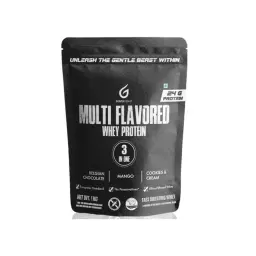
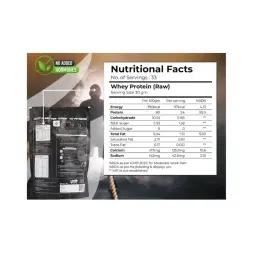

Gentle Beast Whey Protein Concentrate - Unflavored
Gentle Beast | Lab-tested Rating & Review


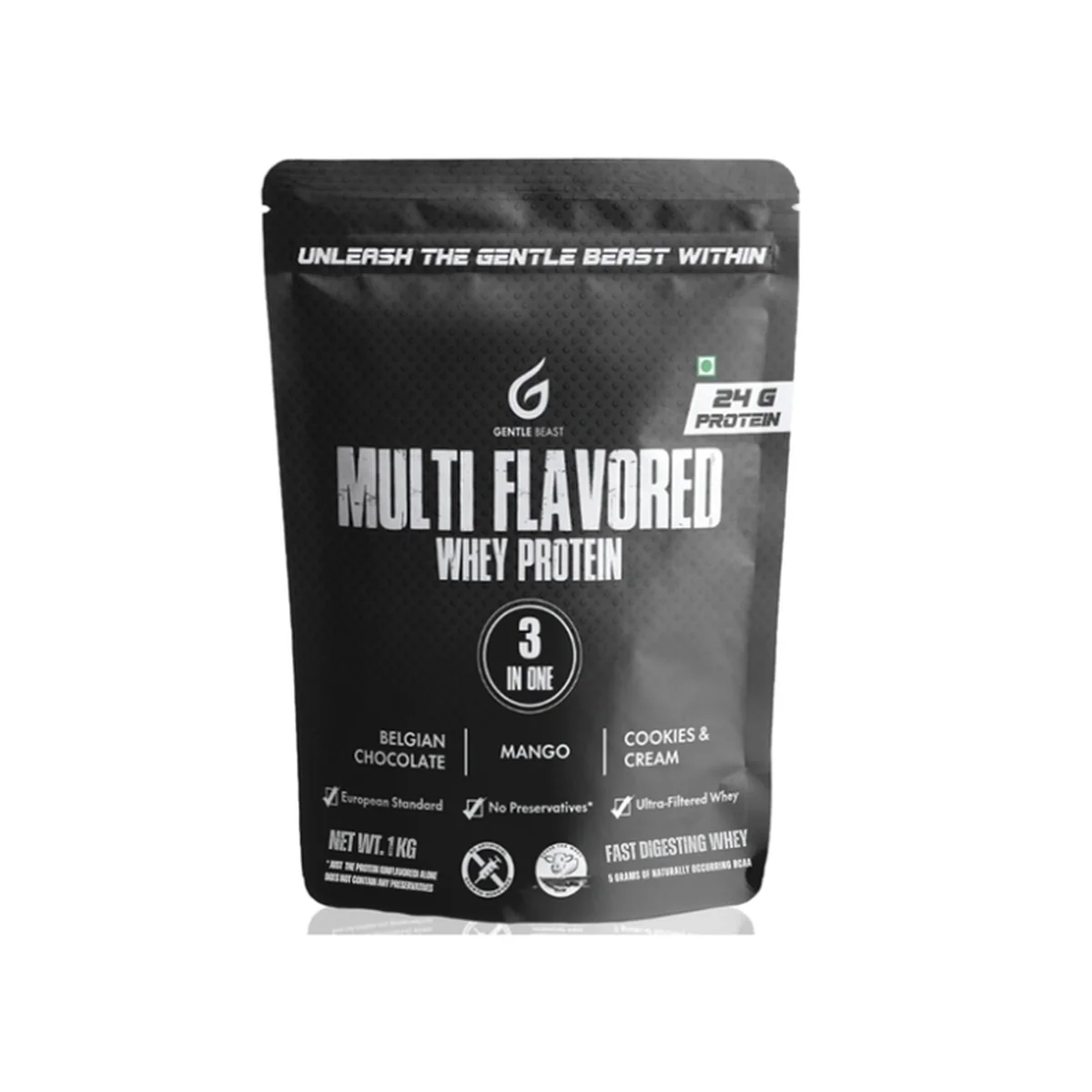
Gentle Beast Whey Protein Concentrate - Unflavored
Gentle Beast | Lab-tested Rating & Review

This product is sold as a 3-in-1 variant with 3 different add-on flavours being sold separately from the Unflavoured Whey powder. Unbox Health's rating is exclusively for the Unflavoured Whey powder and does not factor in the nutritional profile of the 3 add-on flavours.



TSA Tekk Whey Isolate | Strawberry Vanilla Cream


Weoliv Vector Whey Isolate + Concentrate | Double Rich Chocolate

Weoliv Peak Whey Protein Isolate | Double Rich Chocolate

OSOAA Ultimate ISO Whey Protein Isolate | Belgian Chocolate

Foodstrong Whey Protein Powder | Chocolate Almond

Nutrabay Yeast Protein Powder | Cold Coffee

The Whole Truth Whey Protein Isolate | Unflavoured

BeastLife Pro Whey Protein Concentrate | Cookie & Cream

Trunativ Pro Blend Whey Protein Isolate & Concentrate | Choco Crunch

Nakpro Impact Whey Protein Isolate & Concentrate | Chocolate Flavour

Neulife Super Isolate Whey | Swiss Milk Chocolate

TSA Tekk Whey Isolate Chocolate

The Whole Truth Whey Protein Isolate+Concentrate | Light Cocoa

AS-IT-IS ATOM Whey Protein | Double Rich Chocolate

AS-IT-IS ATOM PWR Whey Protein | Double Rich Chocolate

AS-IT-IS One Whey Protein Concentrate 80% | Unflavoured

OZiva Clean Whey Concentrate Protein Powder | Coffee

Neulife Pro Standard Whey Coffee Flavour

Cosmix No-Nonsense Plant Protein | Classic Unflavoured

Cosmix No-Nonsense Fermented Yeast Protein | Malnad Arabica Coffee

Ace Blend Intense Plant Protein | Pea & Brown Rice Isolate | Pink Guava Flavour

Naturaltein Whey Protein Isolate - Chocolate

Bigmuscles Nutrition Essential Whey Protein

Nutrabay BioAbsorb Whey Protein Powder | Dark Chocolate

Sparkfusion Vegan Plant Protein Powder | Triple Chocolate

Gytree Protein Powder For Women | Vegan Dual Plant-Based | Cafe Mocha

Gentle Beast Whey Protein Isolate - Unflavored

Wellbeing Nutrition Vegan Protein - Belgian Dark Chocolate

Dame Health Pure Plant Protein - Caffe Mocha

Origin Nutrition Daily Plant Protein – Unflavoured

Muscle Nectar 100% Whey Protein Powder - Blend of Concentrate & Isolate

Healthify 100% Whey Protein - Classic Vanilla

Healthify 100% Whey Protein - Mango

Healthify 100% Whey Protein - Creamy Coffee

OZiva Bioactive Plant Protein | Chocolate

Unived Pea Protein Isolate with Natural Digestive Enzymes

Plantigo Clean Plant Protein Powder

Optimum Nutrition Gold Standard 100% Whey - Double Rich Chocolate

Mypro Sport Nutrition Plant Protein Powder Pea & Brown Rice Protein

MuscleBlaze 100% Whey Protein Ultra Premium Blend with Whey Protein Concentrate & Whey Protein Isolate

Herbalife Nutrition Personalized Protein Powder

HealthifyMe 100% Whey Protein Blend | Double Chocolate

As-IT-IS Nutrition ATOM Plant Protein
About this Product
What is Unbox Health’s rating for Gentle Beast Whey Protein and how is it calculated?

Gentle Beast Whey Protein received a rating of A+ in Unbox Health’s independent lab testing across label accuracy, safety, and nutritional parameters. Unbox Health rates products from D to A+ after testing every product at multiple accredited labs. We do not share subjective good/bad or pass/fail stamps.
Is Gentle Beast Whey Protein safe to consume regularly?
Gentle Beast Whey Protein received a Non-Toxicity Score of 10 out of 10. Unbox Health did not find any safety concerns in our lab tests. This product was lab tested for the following toxic substances: Total Aflatoxins B,G, Total Aflatoxins M1, Lead, Arsenic, Cadmium, Mercury.
Does Gentle Beast Whey Protein match its label claims?
Gentle Beast Whey Protein received a Label Accuracy Score of 9.94 out of 10. Unbox Health identified one or more minor label inaccuracies in our lab tests. This product was lab tested for the following parameters: Total Protein, Total Carbs, Total Fat, Isoleucine, Leucine, Valine, Lysine, Methionine + Cysteine, Threonine, Phenylalanine + Tyrosine, Tryptophan, Histidine.
Is Gentle Beast Whey Protein healthy?
Gentle Beast Whey Protein received a Nutritional Profile Score of 9.12 out of 10. Based on established nutritional guidelines, Unbox Health determined that this product has a very high nutritional profile.


Popular Categories:
Protein Powders |
Omega-3 Supplements |
Multivitamins |
Plant Protein Powders |
Coffee Powder |
Dark Chocolates |
Cookies & Biscuits |
Chips & Puffs |
Bread |
Ice Cream |
Magnesium Supplements |
Collagen Supplements |
Curcumin Supplements |
Electrolytes |
The Great Indian Product Hunt - Most Voted Products |
Veg Omega-3 Supplements |
Ashwagandha Supplements |
Biotin Supplements |
Breakfast Cereals |
Extra Virgin Olive Oil |
Ghee |
Iron Supplements |
Melatonin Supplements |
Moringa Supplements |
Peanut Butters |
Prebiotics & Fiber |
Protein Bars |
Protein Milkshakes |
Shilajit Supplements |
Snack Bars |
Vitamin B12 Supplements |
Vitamin C Supplements |
Vitamin D Supplements |
Zinc Supplements |
Astaxanthin |
Sea Buckthorn Oil |
Apple Cider Vinegar |
Calcium Supplements |
Creatine Supplements |
Energy Bars |
Filter Coffee |
Fish Oil Capsules |
Granola |
Honey |
Instant Coffee |
Jaggery Powders |
Magnesium Glycinate |
Marine Collagen |
Muesli |
Pea Protein Powders |
Protein Bread |
Protein Chips |
Vegan Collagen |
Virgin Coconut Oil |
Vitamin B9 Supplements |
Vitamin D3+K2 |
Vitamin K2 Supplements |
Whey Protein Powders |
Whole Wheat Bread |
Yeast Protein Powders |
Cooking Oils |
Idli & Dosa Batters |
Instant Noodles |
Paneer |
Kids Nutrition Drinks |
Berberine Supplements |
CoQ10 Supplements |
Vitamin A Supplements |
Vitamin E Supplements
Popular Brands:
Ace Blend |
As-It-Is Nutrition |
Blubein |
Blue Tokai Coffee Roasters |
Carbamide Forte |
Cosmix |
Minus Thirty |
Naturaltein |
Neulife |
Nutrabay |
OZiva |
The Whole Truth |
Unived |
Wellbeing Nutrition |
Centrum |
Gytree |
HealthifyMe |
iThrive |
Lay's |
Man Matters |
Miduty |
NutriJa |
Origin Nutrition |
Phab |
The Good Bug |
TSA Tekk |
Akshayakalpa Organic |
Epigamia |
HealthKart |
Optimum Nutrition |
Swisse |
FAST&UP |
Amway |
Boldfit |
Herbalife Nutrition |
Mojo Bar |
MuscleBlaze |
Muscle Nectar |
MYFITNESS |
Nutrela |
Pintola |
RiteBite Max Protein |
True Elements |
Unibic |
WOW Life Science |
Gentle Beast |
Yogabar |
Aashirvaad |
Allbeing |
Alpino |
Ambrosial |
Amocare |
Amul |
Anveshan |
Apis |
Arth by Emcure |
Artinci |
Bagrry's |
Baskin Robbins |
BBETTER |
Beast Life |
Bevzilla |
Beyond Snack |
Bigmuscles Nutrition |
Biotrex Nutraceuticals |
Body First |
Bold Care |
Borges |
BRITANNIA |
Cadbury |
Cipla |
Conscious Food |
Continental Malgudi |
Country Delight |
Dabur |
Dadev |
Dame Health |
Decode Age |
Del Monte |
Disano |
Dr. Morepen |
Dr. Vaidya's |
Electral |
ElectroFizz |
End2End Nutrition |
Enerza |
English Oven |
Figaro |
Fitzzi |
Folius Labs |
Foodstrong |
Galaxy |
Genone |
Get A Way |
GNC |
Gowardhan |
Go Zero |
Grandeur |
Haleup |
Happilo |
Health Aid |
Health Veda Organics |
HealthVit |
HealthyHey Nutrition |
Herbal max |
Himalaya |
Himalayan Organics |
HK Vitals |
Hohner |
HYP |
iD Fresh Food |
INJA |
Inlife |
Isopure |
Jivo |
Kapiva |
Kellogg's |
KIKIBIX |
Kwality Wall's |
La Nature's |
Lavazza |
Levista |
Lindt |
Liquid I.V. |
Maggi |
Maiva |
McVities |
Milky Mist |
Mille |
Modern |
Monsoon Harvest |
Mypro Sport Nutrition |
Nakpro Nutrition |
Nature Made |
Nature's Velvet |
Nature Valley |
Naturyz |
Nescafe |
Neuherbs |
Neuwganic |
NOA - Nature's Own Alchemy |
Noto |
Now Foods |
Nutrabud |
Nutrazee |
Nutriburst |
NUTRI HERBS |
NutriJet |
NutriQuint |
Nutrova |
nveda |
Open Secret |
Organic India |
Organic Tattva |
Origins Nutra |
ORSL |
OSOAA |
Parle |
Patanjali |
PAUL AND MIKE |
Plantigo |
Plix |
Pro360 |
Protein Chef |
Pure Botanics |
Pure Nutrition |
Quaker |
Rasayanam |
RAW PRESSERY |
Revital H |
Saffola |
Setu |
Sharrets |
Simply Herbal |
Sleepy Owl |
Slurrp Farm |
Snackible |
Solimo |
Soothys |
Sparkfusion |
Sundrop |
Sunfeast Farmlite |
Sunfeast Yippee |
Superyou |
Taali |
TATA 1MG |
Tata Simply Better |
Tata Soulfull |
The Butternut Co. |
The Health Factory |
Thorne |
Too Yumm |
Trexgenics |
TrueBasics |
TruNativ |
Two Brothers Organic Farms |
UPAKARMA |
Vedic Ghee |
VIEROOTS |
VitaOne |
Vito Daily |
VS MANI & CO. |
Weoliv |
Zama |
Zandu |
Zaveda |
Zenith Nutrition |
ZEROHARM |
Zingavita
Popular Comparisons:
Ace Blend vs FAST&UP |
Gowardhan vs Amul |
Ace Blend Plant Protein vs Cosmix |
Nutrabay vs Gentle Beast |
Neulife vs Ace Blend |
Revital H vs Centrum |
Carbamide Forte vs FAST&UP |
Carbamide Forte vs Inlife |
iThrive vs Swisse |
Naturaltein vs Allbeing |
Neulife vs Cosmix |
Phab vs Epigamia |
Sparkfusion vs Dame Health |
Blue Tokai Coffee Roasters vs Sleepy Owl |
Nescafe vs VS MANI & CO |
Britannia vs Britannia |
Cadbury vs The Whole Truth |
Open Secret vs Artinci |
Dabur vs Dr. Vaidya's |
Gytree vs La Nature's
