


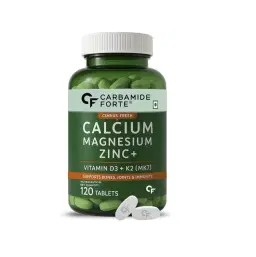
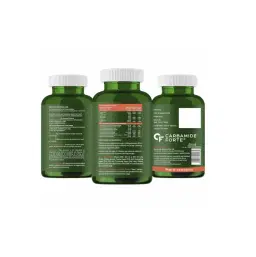


Carbamide Forte Calcium & Vitamin D3
Carbamide Forte | Lab-tested Rating & Review


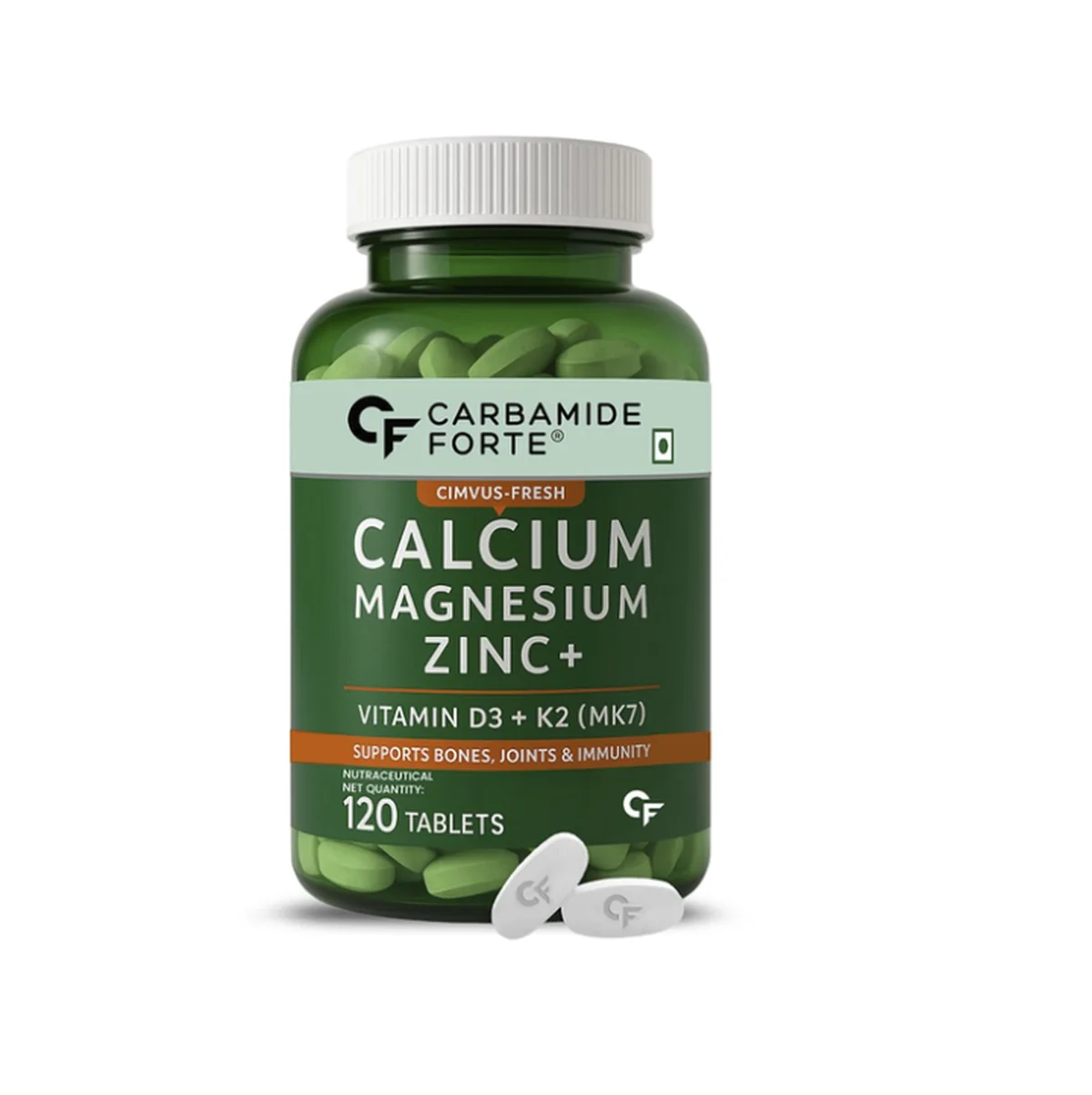
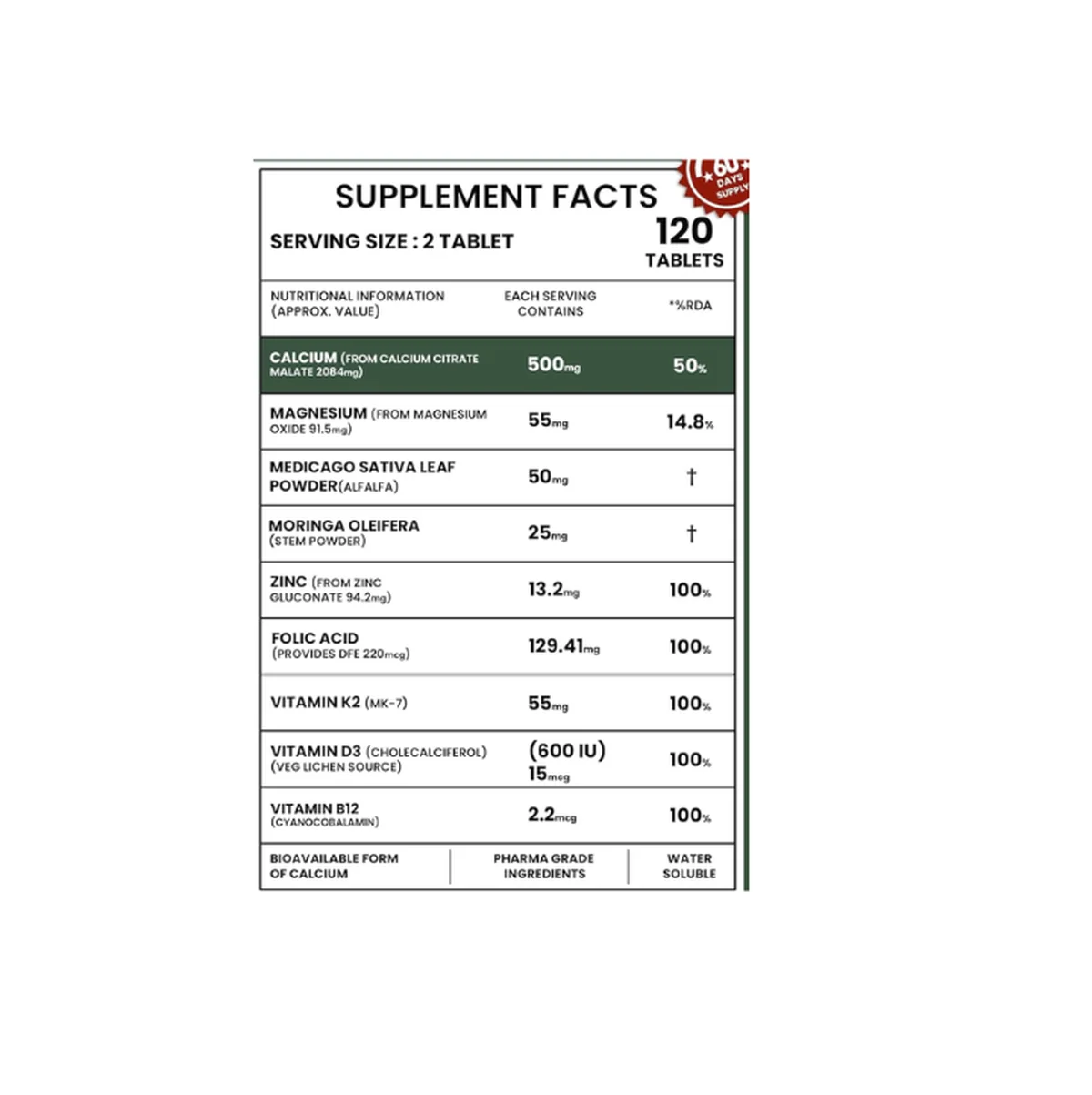
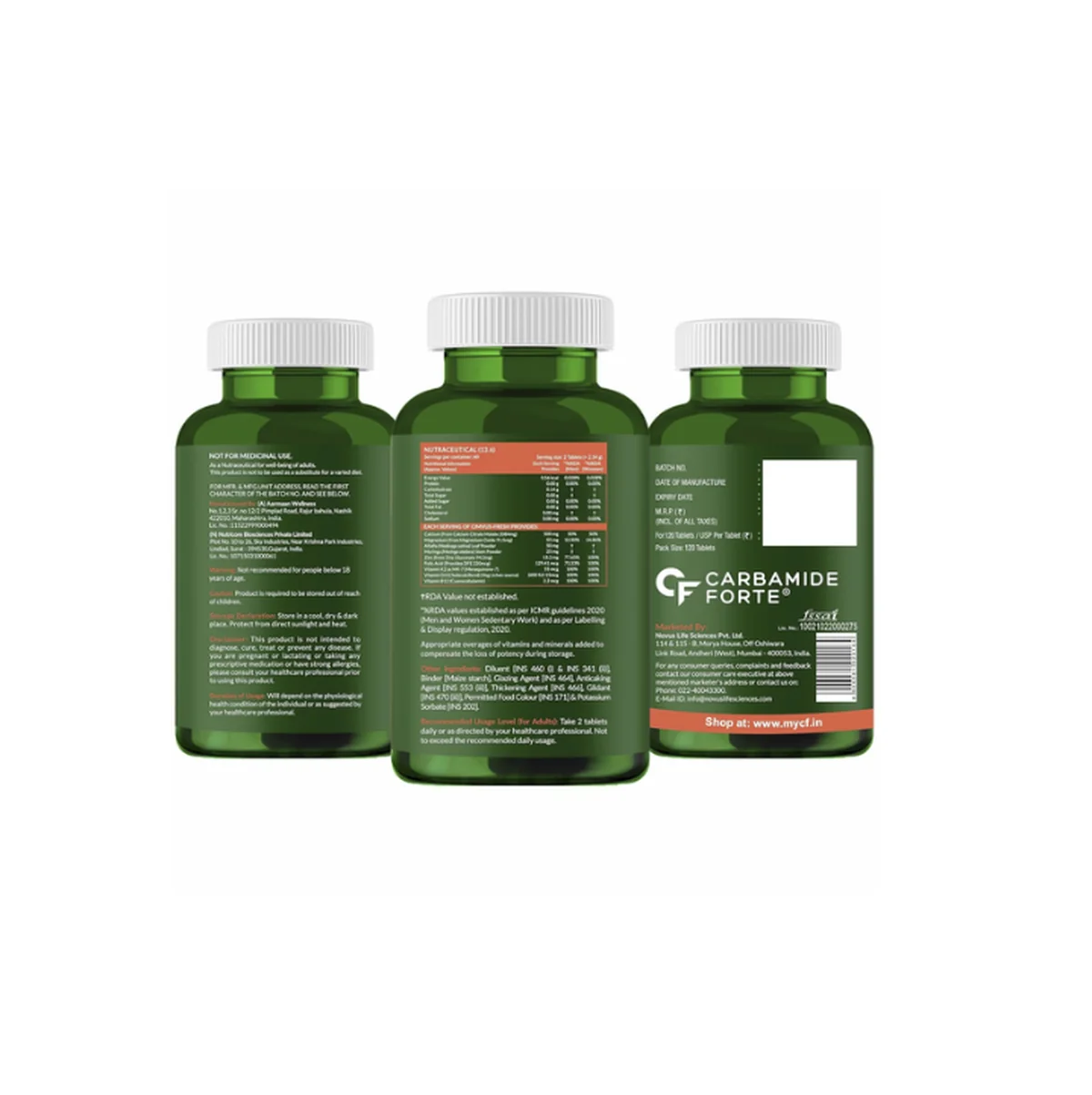
Carbamide Forte Calcium & Vitamin D3
Carbamide Forte | Lab-tested Rating & Review



This rating was initiated by a community vote. We independently purchased Carbamide Forte Calcium & D3 from the open market (Amazon, Batch No: ACF-51), with no brand involvement.
Carbamide Forte Calcium & D3 was third-party tested by Unbox Health at up to 3 NABL-accredited, FSSAI-approved labs, and received a rating of D. We rate products on a (D to A+) scale based on their label accuracy, toxicity and nutritional profile (for foods). All ratings are valid for 12 months. The rating went live on 19 Dec 2025 and its status is Active.
Carbamide Forte had no influence on this rating. All lab reports are published. Read the full methodology for how we rate Magnesium Supplements here.

Tata 1mg Calcium + Vitamin D3 Advanced Tablets

Origins Nutra Calcium + D3 + K2 | Bone Strength

Ace Blend Max Magnesium

Plix Tri-Magnesium Plus

Decode Age DAKE | Vitamin D3, K2, A & E

iThrive Essentials Vitamin D3 K2 Liquid Drops

Origins Nutra Magnesium + D3 + K2 for Women

Origins Nutra Magnesium + D3 + K2 for Men

AS-IT-IS ATOM Vitamin D3 & K2

HealthKart HK Vitals Vitamin D3 600IU / 15mcg

Naturaltein CreaMag Boost Creatine + Magnesium

Decode Age Mag7 Magnesium Supplement

Tata 1mg Magnesium Glycinate Tablets

VitaOne Ionic Magnesium Powder

Unived Chelated Magnesium Glycinate

HK Vitals Magnesium Glycinate Men

Wellbeing Nutrition HydraSalt Electrolytes

Pure Nutrition Chelated Magnesium Glycinate

Neulife Magnesium Bisglycinate Capsules

Ace Blend Hydro Hype | Lemon Raspberry

Health Veda Organics High Absorption Magnesium Glycinate

Albae Cellular Defense Astaxanthin with Vitamins & Minerals

Tata 1mg Biotin

Pure Nutrition Vitamin C (1000mg) Effervescent Tablets with Amla & Zinc

End2End Nutrition Vitamin C - Zinc - Natural Amla Extract

Himalayan Organics Vitamin C Tablets

BBETTER Vitamin C and Zinc tablets

Boldfit Vitamin C Complex 1000mg Tablet with Amla and Zinc

Fast&Up Reload Essential Electrolytes | Lime and Lemon flavour

Enerzal Energy Drink Powder | Orange Flavour

HealthyHey Nutrition Bonemax - Calcium with Magnesium, Vitamin D3 & Vitamin K2

INLIFE Vitamin B12 Methylcobalamin 1500mcg

Wellbeing Nutrition Natural Vitamin D3

TrueBasics Vitamin D3 600IU / 15mcg

Carbamide Forte Chewable Vitamin D3 10000IU / 250mcg

Nutrazee Vegan Vitamin D3

INLIFE VITAMIN D3 5000 IU SUPPLEMENT

Genone Calgen D3 60000IU / 1500mcg

Fitzzi Vitamin D3 60000IU / 1500mcg

Swisse Vitamin D 400IU / 10mcg

Now Foods Vitamin D3 400IU / 10mcg

Natures Velvet Lifecare Vitamin D3 5000IU / 125mcg

iThrive Essentials Magnesium Bisglycinate Chelated Powder

Swisse Magnesium Glycinate & Citrate Powder
![HealthyHey Nutrition Magnesium Glycinate [2024]](/_next/image?url=https%3A%2F%2Funboxhealth-production.s3.amazonaws.com%2Funbox%2Fmedia%2Fproduct_variant%2Fthumbnail%2FHealthyHey-Nutrition-Magnesium-Glycinate-thumbnail.webp&w=3840&q=75)
HealthyHey Nutrition Magnesium Glycinate [2024]
![Decode Age Mag7 | Magnesium Supplement [2024]](/_next/image?url=https%3A%2F%2Funboxhealth-production.s3.amazonaws.com%2Funbox%2Fmedia%2Fproduct_variant%2Fthumbnail%2FDecode-Age-Mag7-Magnesium-Supplement-2024-thumbnail.webp&w=3840&q=75)
Decode Age Mag7 | Magnesium Supplement [2024]

Wellbeing Nutrition Triple Magnesium Complex Slow

Zenith Nutrition High Absorption Chelated Magnesium Glycinate

NutritJet Magnesium Glycinate Citrate Malate Complex

Brinton Magnesium Capsules

Biotrex Nutraceuticals Magnesium Glycinate

Himalayan Organics Magnesium Citrate + Glycinate + Oxide Complex

Swisse Magnesium For Muscle Recovery Sound Sleep & Stress Relief

Boldfit Magnesium Supplements for Men & Women

Carbamide Forte Chelated Magnesium Glycinate

Wellbeing Nutrition Vitamin C + Zinc

OZiva Bettr.C+ (Plant based Vitamin C with Zinc, Rosehip, Bioflavonoids)

Setu Vitamin C: Fizz - Amla Extract and Zinc

Plix Vitamin C Immunity Booster 15 Effervescent Tablets

Nutriburst Triple Immunity Gummies with Vitamin C, Zinc and Amla extract
![HealthyHey Nutrition Vitamin K2 [2024]](/_next/image?url=https%3A%2F%2Funboxhealth-production.s3.amazonaws.com%2Funbox%2Fmedia%2Fproduct_variant%2Fthumbnail%2FHealthyHey-Nutrition-Vitamin-K2-2024-thumbnail.webp&w=3840&q=75)
HealthyHey Nutrition Vitamin K2 [2024]
About this Product
What did Unbox Health's lab tests find in Carbamide Forte Calcium & D3?

Carbamide Forte Calcium & D3 received a rating of D in Unbox Health’s independent lab testing across label accuracy, safety, and nutritional parameters. Unbox Health rates products from D to A+ after testing every product at multiple accredited labs. We do not share subjective good/bad or pass/fail stamps.
Is Carbamide Forte Calcium & D3 safe to consume regularly?
Carbamide Forte Calcium & D3 received a Non-Toxicity Score of 2.64 out of 10. Unbox Health identified one or more significant safety concerns in our lab tests. This product was lab tested for the following toxic substances: Lead, Arsenic, Cadmium, Mercury.
Does Carbamide Forte Calcium & D3 match its label claims?
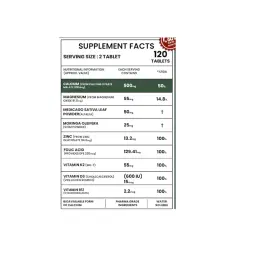
Carbamide Forte Calcium & D3 received a Label Accuracy Score of 9.09 out of 10. Unbox Health identified one or more minor label inaccuracies in our lab tests. This product was lab tested for the following parameters: Calcium, Magnesium, Vitamin D, Vitamin K2, Zinc.
Is Carbamide Forte Calcium & D3 good?
Unbox Health does not label products good or bad. Carbamide Forte Calcium & D3 was rated D based on an aggregate score of 5.87 out of 10, after being independently tested at multiple NABL-accredited labs. It mostly matched all its label claims and did not pass all toxicity checks. All lab test results are published above, so you can evaluate the product against your own priorities.
Does Carbamide Forte Calcium & D3 have any side effects?
Unbox Health tests label accuracy, contaminant levels and nutritional profile, not clinical effects, so it cannot confirm how Carbamide Forte Calcium & D3 may affect an individual. On the safety parameters tested, this product did not pass all toxicity checks. Anyone who is pregnant, breastfeeding, managing kidney or liver conditions, or taking prescription medication should speak to a doctor or dietitian before adding a new product to their routine.
Which batch of Carbamide Forte Calcium & D3 was tested, and when?
Unbox Health tested batch ACF-51 of Carbamide Forte Calcium & D3, which was sourced from Amazon. The rating went live on 19 Dec 2025 and is currently Active. All lab reports are published above.
Is Carbamide Forte Calcium & D3 third-party tested?
Yes. Carbamide Forte Calcium & D3 was independently tested at up to three NABL-accredited, FSSAI-approved laboratories. Unbox Health selected the laboratories and test parameters, while Carbamide Forte had no control over the testing process or the published rating. The product's rating is based solely on the measured laboratory results.
Where can I see Carbamide Forte Calcium & D3's lab test report?
Unbox Health publishes the full lab report for every product it tests. All lab reports for Carbamide Forte Calcium & D3 are available on this page; log in to view it.
Where to buy Carbamide Forte Calcium & D3?
You can buy Carbamide Forte Calcium & D3 from any trusted marketplace or the brand's official website. Direct purchase links are provided in the Where to Buy section on this page. Unbox Health does not sell products or recommend any specific retailer. Prices, availability, and stock can change frequently, and the product you purchase may belong to a different batch than the one tested by Unbox Health.

Find Unbox Health ratings useful?
Add Unbox Health as a preferred source on Google to get search results based on credible lab test data.


Popular Categories:
Protein Powders |
Omega-3 Supplements |
Multivitamins |
Plant Protein Powders |
Coffee Powder |
Dark Chocolates |
Cookies & Biscuits |
Chips & Puffs |
Bread |
Ice Cream |
Magnesium Supplements |
Collagen Supplements |
Curcumin Supplements |
Electrolytes |
The Great Indian Product Hunt - Most Voted Products |
Veg Omega-3 Supplements |
Ashwagandha Supplements |
Biotin Supplements |
Breakfast Cereals |
Extra Virgin Olive Oil |
Ghee |
Iron Supplements |
Melatonin Supplements |
Moringa Supplements |
Peanut Butters |
Prebiotics & Fiber |
Protein Bars |
Protein Milkshakes |
Shilajit Supplements |
Snack Bars |
Vitamin B12 Supplements |
Vitamin C Supplements |
Vitamin D Supplements |
Zinc Supplements |
Astaxanthin |
Sea Buckthorn Oil |
Apple Cider Vinegar |
Calcium Supplements |
Creatine Supplements |
Energy Bars |
Filter Coffee |
Fish Oil Capsules |
Glutathione Supplements |
Granola |
Honey |
Hyaluronic Acid Supplements |
Instant Coffee |
Jaggery Powders |
Magnesium Glycinate |
Marine Collagen |
Muesli |
Pea Protein Powders |
Protein Bread |
Protein Chips |
Protein Oats |
Protein Wafers |
Selenium Supplements |
Vegan Collagen |
Virgin Coconut Oil |
Vitamin B9 Supplements |
Vitamin D3+K2 |
Vitamin K2 Supplements |
Whey Protein Powders |
Whole Wheat Bread |
Yeast Protein Powders |
Cooking Oils |
Idli & Dosa Batters |
Instant Noodles |
Paneer |
Kids Nutrition Drinks |
Berberine Supplements |
CoQ10 Supplements |
Vitamin A Supplements |
Vitamin E Supplements
Popular Brands:
Ace Blend |
As-It-Is Nutrition |
Blubein |
Blue Tokai Coffee Roasters |
Carbamide Forte |
Cosmix |
Minus Thirty |
Naturaltein |
Neulife |
Nutrabay |
OZiva |
The Whole Truth |
Unived |
Wellbeing Nutrition |
Centrum |
Gytree |
HealthifyMe |
iThrive |
Lay's |
Man Matters |
Miduty |
NutriJa |
Origin Nutrition |
Phab |
The Good Bug |
TSA Tekk |
Akshayakalpa Organic |
Epigamia |
HealthKart |
Optimum Nutrition |
Swisse |
FAST&UP |
Amway |
Boldfit |
Herbalife Nutrition |
Mojo Bar |
MuscleBlaze |
Muscle Nectar |
MYFITNESS |
Nutrela |
Pintola |
RiteBite Max Protein |
True Elements |
Unibic |
WOW Life Science |
Gentle Beast |
Yogabar |
Aashirvaad |
Albae |
Allbeing |
Alpino |
Ambrosial |
Amocare |
Amul |
Anveshan |
Apis |
Arth by Emcure |
Artinci |
Avvatar |
Bagrry's |
Baskin Robbins |
BBETTER |
Beast Life |
Bevzilla |
Beyond Snack |
Bigmuscles Nutrition |
Biotrex Nutraceuticals |
Body First |
Bold Care |
Borges |
BRITANNIA |
Cadbury |
Cipla |
Conscious Food |
Continental Malgudi |
Country Delight |
Dabur |
Dadev |
Dame Health |
Decode Age |
Del Monte |
Disano |
Doctors Choice |
Dr. Morepen |
Dr. Vaidya's |
Electral |
ElectroFizz |
End2End Nutrition |
Enerza |
English Oven |
Figaro |
Fitzzi |
Folius Labs |
Foodstrong |
Galaxy |
Genone |
Get A Way |
GNC |
GOAT Life |
Gowardhan |
Go Zero |
Grandeur |
Gritzo |
Haleup |
Happilo |
Health Aid |
Health Veda Organics |
HealthVit |
HealthyHey Nutrition |
Herbal max |
Himalaya |
Himalayan Organics |
HK Vitals |
Hohner |
HYP |
iD Fresh Food |
INJA |
Inlife |
Isopure |
Jivo |
Kapiva |
Kellogg's |
KIKIBIX |
Kwality Wall's |
La Nature's |
Lavazza |
Levista |
Lindt |
Liquid I.V. |
Little Joys |
Maggi |
Maiva |
McVities |
Milky Mist |
Mille |
Modern |
Monsoon Harvest |
Mypro Sport Nutrition |
Nakpro Nutrition |
Nature Made |
Nature's Velvet |
Nature Valley |
Naturyz |
Nescafe |
Neuherbs |
Neuwganic |
NOA - Nature's Own Alchemy |
Noto |
Now Foods |
Nutrabud |
Nutrazee |
Nutriburst |
NUTRI HERBS |
NutriJet |
NutriQuint |
Nutrova |
nveda |
Open Secret |
Organic India |
Organic Tattva |
Origins Nutra |
ORSL |
OSOAA |
Parle |
Patanjali |
PAUL AND MIKE |
Plantigo |
Plix |
Pro360 |
Protein Chef |
Pure Botanics |
Pure Nutrition |
Quaker |
Rasayanam |
RAW PRESSERY |
Revital H |
Saffola |
Setu |
Sharrets |
Siens by Dabur |
Simply Herbal |
Sleepy Owl |
Slurrp Farm |
Snackible |
Solimo |
Soothys |
Sparkfusion |
Sundrop |
Sunfeast Farmlite |
Sunfeast Yippee |
Superyou |
Taali |
TATA 1MG |
Tata Simply Better |
Tata Soulfull |
The Butternut Co. |
The Health Factory |
Thorne |
Too Yumm |
Trexgenics |
TrueBasics |
TruNativ |
Two Brothers Organic Farms |
UPAKARMA |
Vedic Ghee |
VIEROOTS |
VitaOne |
Vito Daily |
VS MANI & CO. |
Weoliv |
Zama |
Zandu |
Zaveda |
Zenith Nutrition |
ZEROHARM |
Zingavita
Popular Comparisons:
Ace Blend vs FAST&UP |
Gowardhan vs Amul |
Ace Blend Plant Protein vs Cosmix |
Nutrabay vs Gentle Beast |
Neulife vs Ace Blend |
Revital H vs Centrum |
Carbamide Forte vs FAST&UP |
Carbamide Forte vs Inlife |
iThrive vs Swisse |
Naturaltein vs Allbeing |
Neulife vs Cosmix |
Phab vs Epigamia |
Sparkfusion vs Dame Health |
Blue Tokai Coffee Roasters vs Sleepy Owl |
Nescafe vs VS MANI & CO |
Britannia vs Britannia |
Cadbury vs The Whole Truth |
Open Secret vs Artinci |
Dabur vs Dr. Vaidya's |
Gytree vs La Nature's
Popular Collections:
High Protein Foods & Supplements |
Daily Vitamins & Minerals |
Trending Supplements |
Fitness & Performance Nutrition |
Snacks & Treats |
Ayurvedic & Herbal |
Kitchen Essentials |
Men's Health |
Plant-Based & Vegan |
Women's Health |
Strength Training |
Kids Nutrition |
Endurance |
Seniors' Health |
Pregnancy |
Muscle Gain |
Hair Health |
Gut Health |
Bone & Joint |
Weight Gain |
Skin Health |
Weight Loss |
Immunity |
Sleep |
Energy & Fatigue |
Brain Health |
Stress & Anxiety |
Menopause |
Anti-Ageing |
Sugar-Free |
General Wellness |
Lactose-Free |
Natural Sweeteners |
Probiotics & Prebiotics |
Cold-Pressed & Unrefined Oils
